
Single length iron coverage tends toward two extremes: enthusiast evangelism that ignores the trade-offs, or dismissive scepticism that ignores the evidence.
This article gives you the honest middle — every genuine advantage and every genuine disadvantage, based on independent testing data and long-term user experience.
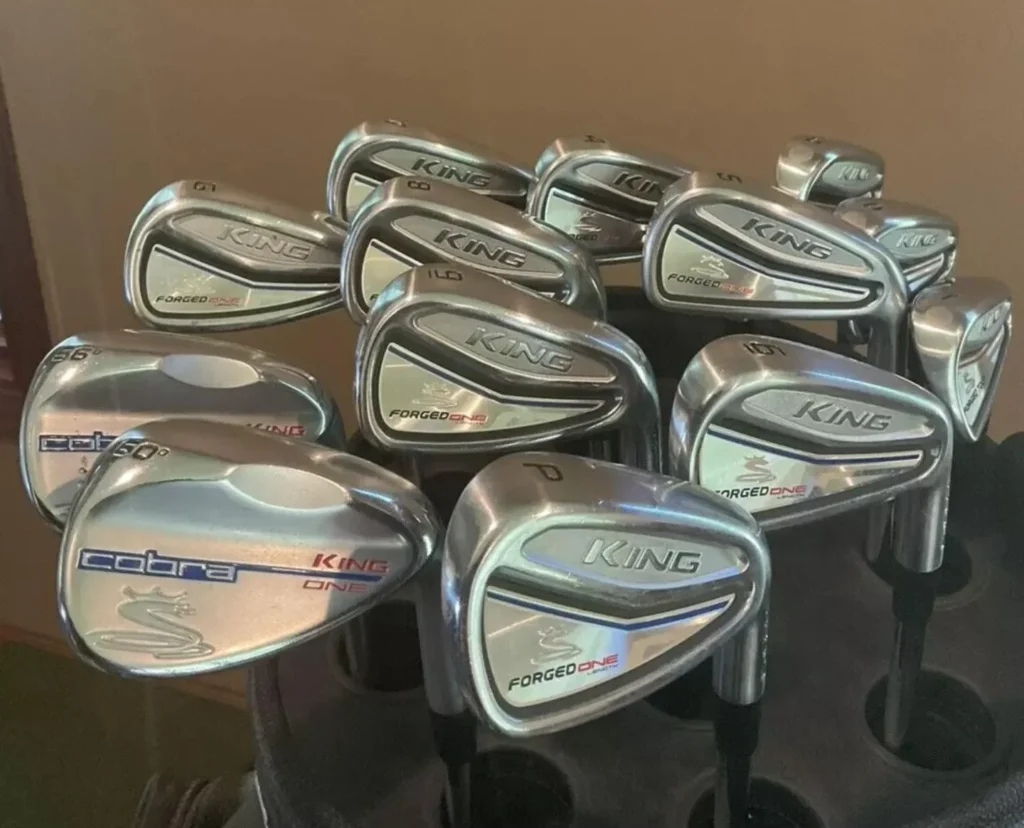
✅ The Real Advantages
1. Tighter long iron dispersion for setup-inconsistent golfers
This is the most genuine and evidence-supported advantage. Golfers whose long iron inconsistency is caused by imperfect setup adjustments for different club lengths — the majority of recreational golfers — see real, measurable improvement in 4, 5, and 6-iron directional accuracy after the adaptation period.
Independent testing data supports an average 15–32% improvement in lateral dispersion from long iron distances.
2. Reduced cognitive complexity during a round
Golf is partly a cognitive game, and anything that reduces decision complexity over 18 holes conserves mental resources for course management and shot execution.
With single-length irons, the pre-shot setup checklist is the same for every iron — one less variable to manage under pressure.
3. Consistent lie angle across the set
All clubs in a single-length set share the same lie angle. This means directional errors from lie angle inconsistency — which exist in variable-length sets where each club has a slightly different dynamic lie — are eliminated. Ball flight patterns are more consistent and predictable across the set.
4. Practical for physical limitations
Golfers with back pain, shoulder restrictions, hip limitations, or other physical conditions that make stance and posture adjustments difficult benefit meaningfully from the single-setup requirement.
This includes many senior golfers and players returning from injury.
❌ The Real Disadvantages
1. Distance loss from long irons — real and consistent
Single-length 4, 5, and 6-irons are shorter than their variable-length equivalents, producing less swing speed and therefore less distance. Independent testing consistently shows 5–12 yard distance loss from long irons.
This is not engineering failure — it is the direct physical consequence of shorter shaft length. It cannot be engineered away.
2. Narrower distance gaps across the set
Single-length sets produce 8–10 yard gaps between clubs versus 10–15 yards in conventional sets.
For golfers who rely on precise distance control — particularly for approach shots to firm greens where landing zone precision matters — this is a genuine disadvantage. You have fewer distinct distance options in your bag.
3. Mandatory 4–8 week adaptation period
The adaptation period is a real cost — particularly for golfers who compete regularly and cannot afford a multi-week period of temporarily reduced performance.
Golfers planning to use single-length irons for a club championship or important competition should make the switch at least 8 weeks beforehand.
4. Wedge transition inconsistency
The gap between a single-length pitching wedge (37.5 inches) and a conventional gap wedge (35.5 inches) is jarring initially.
Golfers must consciously manage this transition and practice it specifically — it doesn’t resolve automatically during the iron adaptation period.
The sets where the pros are maximised and the cons are minimised — through the best CG engineering, shaft options, and available fitting — are covered in detail in the single length irons we recommend.