High handicappers (19+ handicap index) are one of the most discussed potential audiences for single-length irons. The intuitive appeal is clear — if consistent setup is the key benefit, and high handicappers are more setup-inconsistent than low handicappers, shouldn’t high handicappers benefit most?
The reality is more nuanced than this logic suggests.
The Case For — Why High Handicappers Might Benefit
High handicap golfers typically have greater setup variability than lower handicappers. If a significant portion of their long iron inconsistency is caused by imperfect length adjustments — which is plausible for many high handicappers who haven’t received formal instruction — single-length irons could produce meaningful improvement in directional consistency from long iron distances.
Additionally, high handicappers have less deeply ingrained muscle memory for specific length adjustments than low handicappers who have practised the same variable-length patterns for years. This means the adaptation period may be shorter and less disruptive for newer or less experienced golfers.
The Case Against — The Critical Complication
The significant complication for high handicappers is practice frequency. The adaptation period for single-length irons requires 4–8 weeks of regular practice — ideally 2–3 range sessions per week in addition to on-course play. Many high handicappers play once per week or less and rarely visit the range between rounds.
At this frequency, the adaptation period extends to 3–4 months or longer, and the consistency improvement may never fully emerge because the new movement pattern never becomes truly ingrained.
⚠️ The Practice Requirement: Single-length irons require sufficient practice volume to complete the adaptation period. A high handicapper who plays 18 holes once per week but never visits the range is unlikely to achieve the adaptation needed to see the consistency benefits — regardless of how good the single-length design is.
The Alternative for High Handicappers: Hybrid Iron Sets
For high handicappers whose primary long iron problem is a combination of direction and distance — which is the most common high-handicap pattern — hybrid iron sets (like the Callaway Elyte X or Cobra Fly-XL) often represent a more practical solution. Hybrid irons solve the long iron problem through forgiveness and launch technology rather than through setup standardisation, and they require no adaptation period.
A high handicapper who switches to a hybrid iron set sees immediate improvement from round one.
Single-length irons are the better choice for the high handicapper who: (a) practices regularly, (b) hits the ball reasonably far but offline with their long irons, and (c) has the patience to complete the adaptation period. For everyone else in the high handicap range, hybrid or game improvement conventional irons are the more practical recommendation.
Best Single Length Sets for High Handicappers
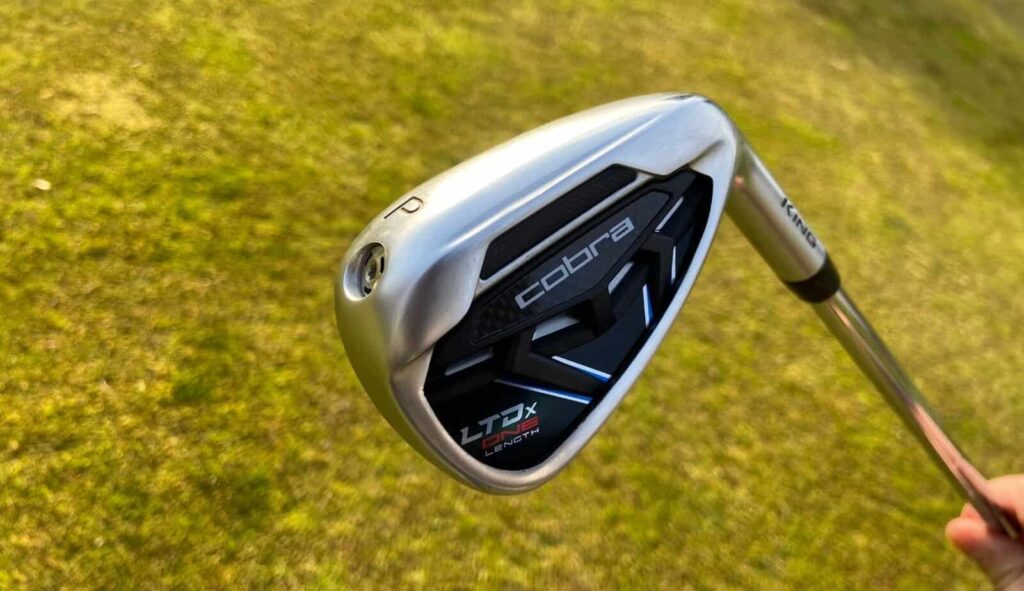
If a high handicapper does decide single-length irons are the right choice, the Cobra F-Max One Length is the strongest recommendation — its ultralight 40g graphite shaft and Baffler Rail sole specifically address slower swing speeds and inconsistent turf contact that are common at higher handicap levels.
The Tour Edge E521 One Length at $299–$399 is the best budget option for high handicappers who want to trial the concept without a major financial commitment.
For full specs, testing data, and recommendations across all handicap levels, see our expert single length irons guide.