Blade vs Muscle Back Irons — What’s the Difference?
“Blade” and “muscle back” are used interchangeably in most golf shops — but they’re not identical. Here’s where the terminology overlaps and where the real differences lie in design, performance, and who each suits.
The Terminology Problem
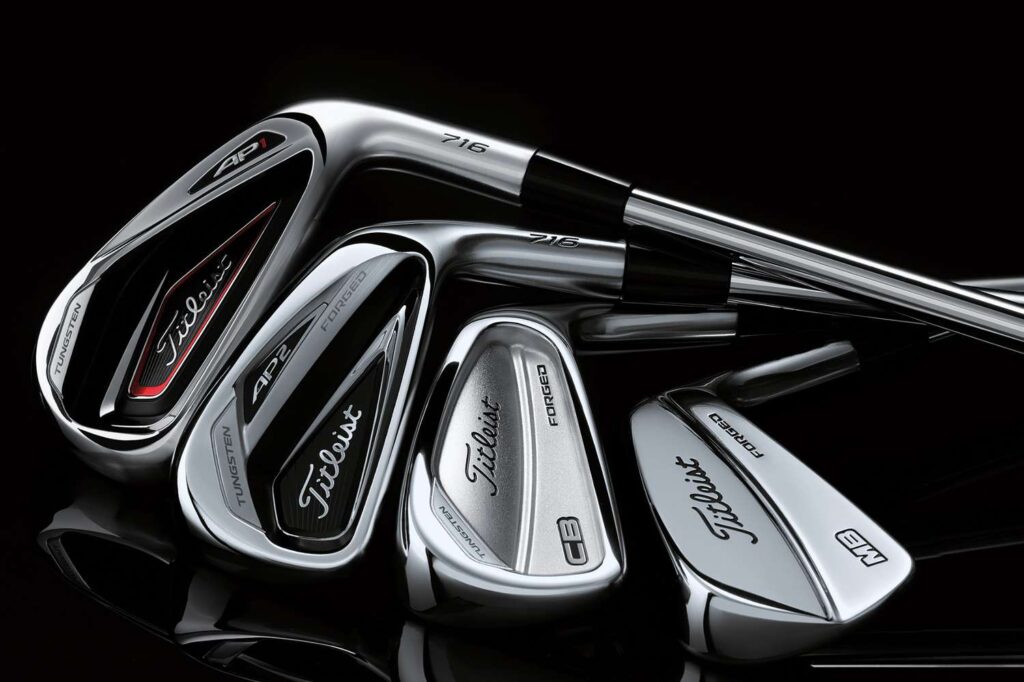
Walk into any golf retailer and ask for “blade irons” — you’ll be shown muscle backs, combo backs, and player’s distance irons all under the same label. The confusion is partly historical. When cavity back irons were introduced in the late 1960s and 1970s, every iron before them was effectively a blade. The word “muscle back” entered the vocabulary to distinguish traditional solid-back irons from the new perimeter-weighted designs.
Today, the terms are often used as synonyms — but there is a meaningful technical distinction, especially at the premium end of the market.
What Is a Pure Blade?
In the strictest sense, a blade iron is defined by its profile: thin topline, narrow sole, minimal offset, and a flat back face with mass concentrated purely behind the hitting area. The blade shape is almost two-dimensional when viewed from above — the head is narrow from front to back, giving the impression of a knife blade (hence the name).
Classic examples: TaylorMade P7MB (2023), Titleist T100 3G, SMT Golf MB-3 Forged. These are sometimes called “player’s irons” in manufacturer marketing, but among fitters the term “pure blade” or “true blade” is more precise.
What Is a Muscle Back?
A muscle back refers specifically to the back profile of the iron: a raised section of material (the “muscle”) directly behind the sweet spot area, which can sit on top of a variety of overall designs. By this definition, all pure blades are muscle backs — but not all muscle backs are pure blades.
The muscle back design was developed to put more mass behind the primary impact zone without going all the way to a full perimeter cavity. Some muscle back designs have a slight cavity milled into the upper or lower portion of the back, which technically makes them a partial cavity iron with a muscle back feature — often called a “muscle cavity” or CB (cavity back) iron in the blade family.
Side-by-Side Comparison
| Feature | Pure Blade | Muscle Back (CB) |
|---|---|---|
| Back design | Completely flat / no cavity | Muscle with shallow upper/lower cavity |
| Address look | Very thin, clean, compact | Thin but slightly deeper profile |
| MOI | Very low | Slightly higher |
| Forgiveness | Minimal | Slightly more |
| Workability | Maximum | High (slightly less than pure blade) |
| Best for | Scratch/tour-level players | Low-to-single-digit handicappers |
Real-World Examples
TaylorMade P7MB (Pure Blade): A true muscle back — flat back, forged from 1025 carbon steel, no cavity of any kind. Designed for tour players and scratch amateurs who demand maximum workability and accept zero forgiveness tolerance.
Cobra King CB/MB Combo: The 3-7 irons are muscle backs; 8-PW are a combo-back cavity. This is a real-world acknowledgment that even skilled players need a margin of error in the longer irons. The muscle back section retains blade-like feel in scoring irons where strike quality is most consistent.
TaylorMade P770: A muscle cavity — it has the visual profile of a blade with a shallow cavity that adds modest perimeter weighting. Players who want the look of a blade but a slightly more forgiving play. Common among 5–10 handicappers.
Which Should You Choose?
If you’re a scratch-to-plus handicapper with consistent centre-face strikes and a strong short game, the pure blade (P7MB, T100 3G) is almost certainly the better tool. The pure blade rewards your technique and helps you shape shots more precisely.
If you’re a 3–9 handicapper who makes good contact most of the time but has occasional heel or toe misses, a muscle cavity (P770, Cobra CB/MB) gives you the blade look at address, comparable feel on well-struck shots, and a small amount of extra stability on poor strikes. In scoring terms, this is often the smarter choice.
The Takeaway
Blade and muscle back are related but not identical. Pure blades prioritise feel and workability above all. Muscle cavity irons balance those qualities with a small forgiveness margin. Both categories are covered in our blade irons recommendations — with testing data to help you choose.