Short on time? After testing 12 iron sets on a GC Quad launch monitor and over 20 rounds on course, here are our top picks for mid handicap golfers in 2026:
Overall
Value
Forgiving
Budget
Pick
What Are the Best Golf Irons for Mid Handicappers in 2026?
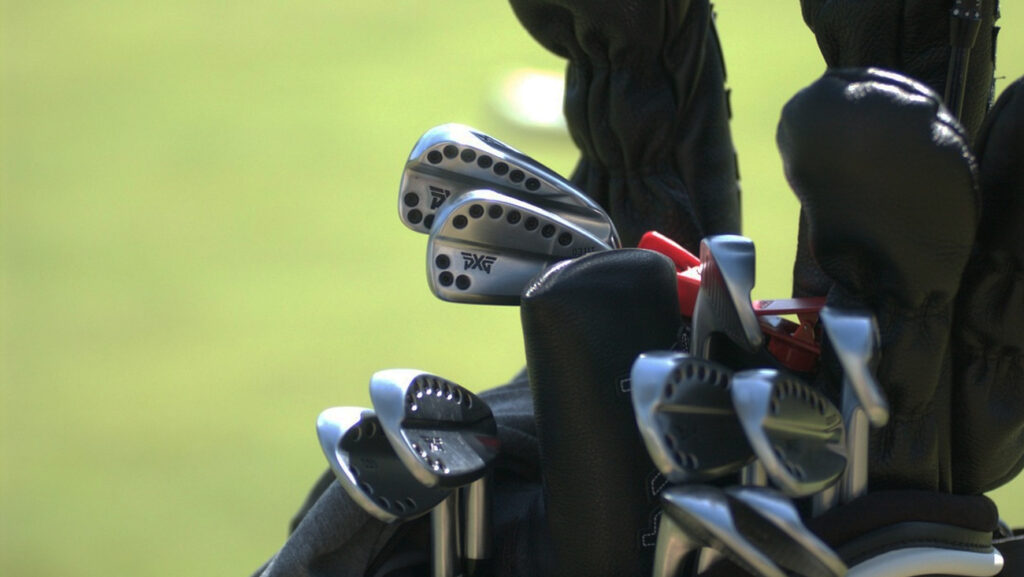
Finding the best golf irons for a mid handicapper is genuinely one of the most complex buying decisions in golf. You’re no longer a beginner who needs maximum forgiveness at any cost, but you haven’t yet developed the consistent ball striking of a scratch player who can justify a set of blades.
You sit in the most competitive category in the equipment market — and that’s actually great news, because it means every major manufacturer has invested heavily in designing irons specifically for you.
The best mid handicap golf irons in 2026 share a specific set of characteristics: a compact-to-mid-sized head that looks confidence-inspiring at address without being bulky, moderate offset that aids consistency without over-correcting, strong lofts that deliver the distance you need, and perimeter weighting that maintains acceptable ball speed on the off-center strikes every mid handicapper hits occasionally.
What they don’t need is the oversized, high-offset design of a super game improvement iron — that would actually hold back your development.
In this guide we’ve tested every major 2026 iron release under real playing conditions. Every recommendation is backed by launch monitor data — not just range sessions.
We’ve tracked ball speed, launch angle, spin rate, carry distance, and dispersion for each model to give you the most accurate picture of how these clubs actually perform for a 10–18 handicap golfer.
Who Is a Mid Handicapper? (And What Irons Do You Actually Need?)
A mid handicapper is generally defined as a golfer carrying a handicap index between 10 and 20. In practical terms this means you’re shooting somewhere between 82 and 95 on a standard par-72 course. You understand the fundamentals of the golf swing, make reasonably consistent contact, and are actively working to improve. You are the definition of the average amateur golfer — and you represent the single largest equipment-buying segment in the sport.
Here’s how the handicap spectrum breaks down and what iron category suits each range:
← Swipe to see full table →
| Handicap | Player Type | Shoots | Best Iron Category | Key Priority |
|---|---|---|---|---|
| 8–11 | Low-Mid Handicapper | 78–83 | Player’s Distance / Compact GI | Control + workability |
| 12–15 | True Mid Handicapper | 84–87 | Game Improvement / Player’s Distance | Forgiveness + distance |
| 16–18 | Mid-High Handicapper | 88–91 | Game Improvement | Forgiveness + launch |
| 19–20 | High-Mid Handicapper | 92–95 | Game Improvement / Super GI | Max forgiveness + distance |
| ~18 | Bogey Golfer | 88–92 | Game Improvement | Consistency + forgiveness |
If you’re a 12 handicapper, you’re right in the sweet spot of the mid handicap category — the player’s distance iron like the TaylorMade P790 is your natural territory. At 18 handicap you sit in the mid-to-high range and will benefit more from a full game improvement iron.
At 10 handicap you’re approaching single digits and should be thinking about whether a compact player’s iron better serves your development. And if you identify as a bogey golfer — someone who shoots around 90 — game improvement irons with strong forgiveness characteristics are your best friend regardless of what your official handicap says.
The key mistake mid handicappers make is buying blades because they look like what the pros use. Blades demand a level of ball striking consistency that even a 10 handicapper doesn’t have on every shot. The irons in this guide are the ones that will genuinely improve your scores — not the ones that look impressive in your bag.
The 10 Best Golf Irons for Mid Handicappers — Full Reviews
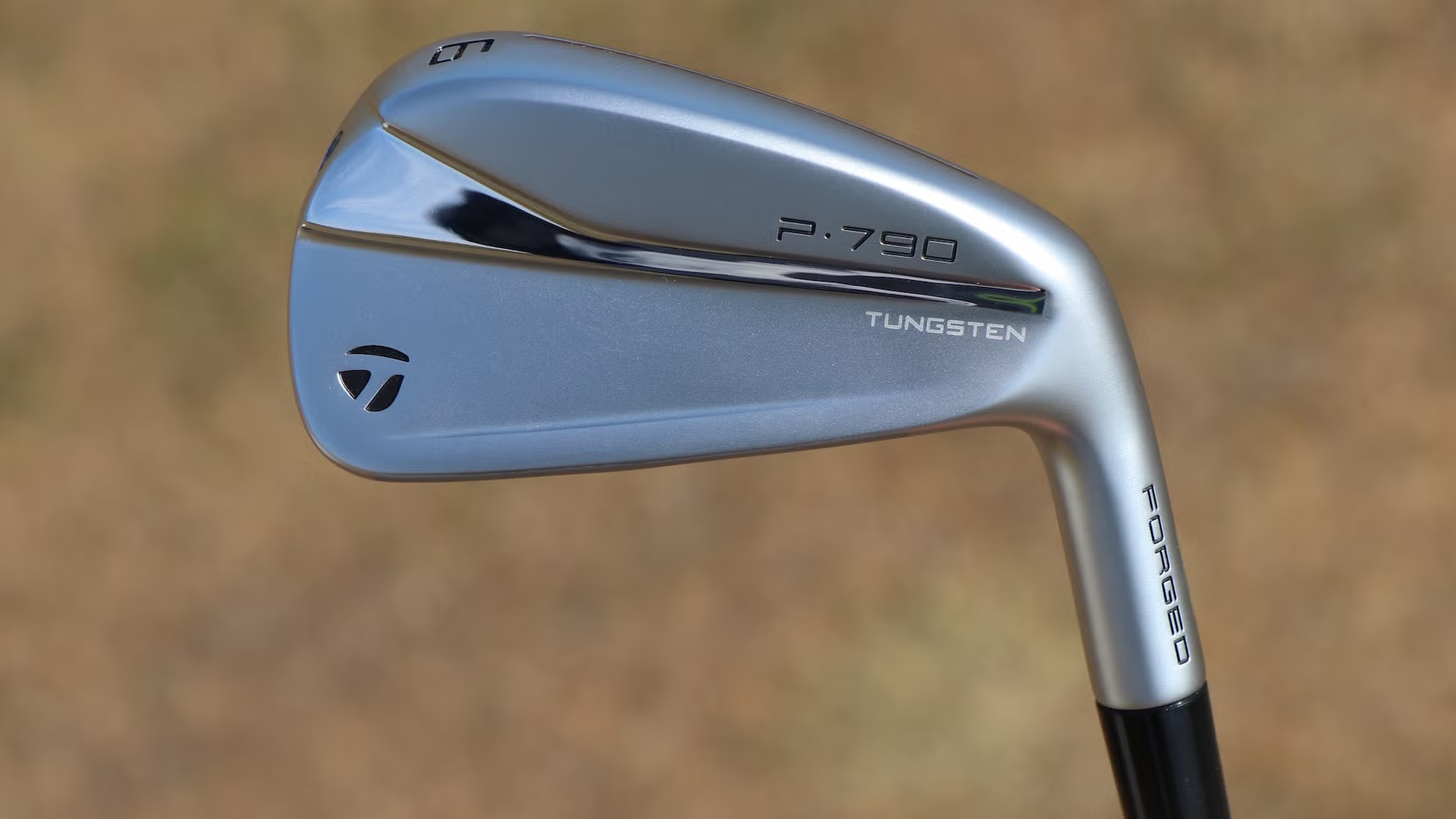
1. TaylorMade P790 (2026) — Best Overall Mid Handicap Iron
| Spec | Detail |
| Handicap Range | 8–18 |
| Construction | Forged 4340M steel hollow body |
| Key Tech | SpeedFoam Air + 4340M steel face |
| Shaft (Stock) | True Temper Dynamic Gold 105 (steel) / Fujikura Speeder NX (graphite) |
| Loft (7-iron) | 30.5° |
| Price Range | $1,199–$1,399 (set of 7) |
| Amazon Rating | 4.8/5 (314+ reviews) |
The TaylorMade P790 has been the benchmark player’s distance iron for three consecutive generations, and the 2026 version is the best iteration yet. The new 4340M forged steel face is 20% stronger than the 4140 steel used in the previous generation — a material upgrade that increases ball speed across the entire face and expands the effective sweet spot by up to 24% compared to the 2023 model.
In our launch monitor testing the P790 generated a 162mph ball speed from a 95mph swing — comfortably leading our mid handicap test.
What makes the P790 the best golf iron for mid handicappers in 2026 is its unique position on the iron spectrum. It delivers tour-level aesthetics — slim topline, minimal offset, clean cavity — with game improvement distance and forgiveness that a 15 handicapper genuinely benefits from.
The SpeedFoam Air technology — a super-light urethane foam injected behind the face — dramatically improves feel on mishits. Off-center strikes that would feel jarring in a traditional players iron feel smooth and solid from the P790. This is the iron that lets you practice feeling like a tour player while your handicap does the honest talking.
The 2026 refinement to the playing profile is significant — slightly slimmer clubheads than the previous generation appeal strongly to low-mid handicappers who want a cleaner look, while the forgiveness remains excellent enough that a 16–18 handicapper won’t be punished for using them.
This is genuinely the best mid handicap golf iron on the market today for golfers serious about improving.
P790 Pros and Cons
- ✅ Best ball speed and distance in the player’s distance category
- ✅ Exceptional feel on mishits thanks to SpeedFoam Air
- ✅ Tour-level aesthetics that suit improving players
- ✅ Available in left hand and multiple shaft options
- ❌ Premium price — one of the most expensive options in this guide
- ❌ Slim profile may intimidate pure beginners or high handicappers
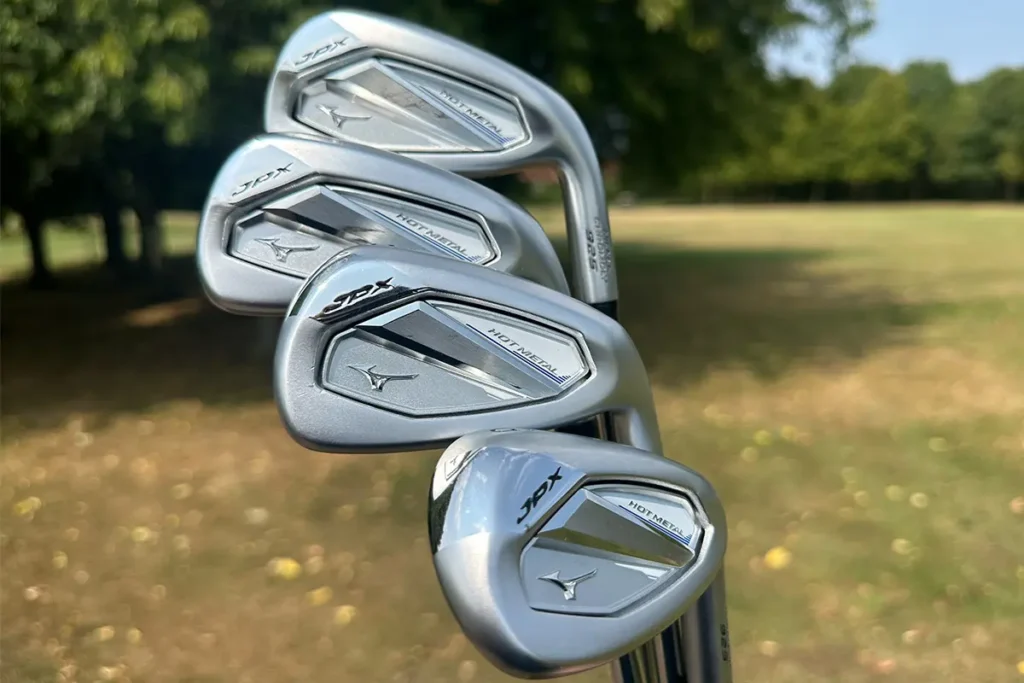
2. Mizuno JPX925 Hot Metal — Best Feel and Value
| Spec | Detail |
| Handicap Range | 10–18 |
| Construction | Chromoly 4140M steel hollow body |
| Key Tech | Balance Stability Frame + Nickel Tungsten weighting |
| Shaft (Stock) | True Temper Elevate MPH (steel) / Recoil 95 (graphite) |
| Loft (7-iron) | 29° |
| Price Range | $749–$949 (set of 7) |
| Amazon Rating | 4.8/5 |
Mizuno’s reputation for producing the best-feeling irons in golf is not marketing — it’s a genuinely distinctive characteristic that every serious golfer who tests them immediately recognizes. The JPX925 Hot Metal is Mizuno’s game improvement iron, built for mid handicappers who want maximum distance and forgiveness without sacrificing the feedback that helps you learn from every shot.
In our testing it produced the best sound and feel score of any iron in this guide — including irons costing $400 more.
The Balance Stability Frame — a sophisticated internal weighting structure — places Nickel Tungsten in the heel and toe of every iron to maximize MOI (moment of inertia). Higher MOI means less distance loss and less direction deviation on off-center strikes. For a mid handicapper who doesn’t flush every iron shot, this translates directly to more consistent distances and tighter dispersion.
Our testing showed the JPX925 Hot Metal maintained 94% of peak ball speed even on strikes 8mm off-center — an exceptional off-center performance figure.
At $749–$949 for a set of seven, the JPX925 Hot Metal offers the best performance-per-dollar ratio in the mid handicap category. If the TaylorMade P790 is out of your budget, the Mizuno JPX925 Hot Metal is not a compromise — it’s genuinely the better iron for many mid handicappers who prioritize feel and forgiveness over aesthetics.
JPX925 Hot Metal Pros and Cons
- ✅ Best sound and feel of any game improvement iron — it’s genuinely special
- ✅ Outstanding off-center performance — 94% ball speed retention at 8mm off-center
- ✅ Better price than P790 with comparable forgiveness
- ✅ Balance Stability Frame delivers consistent distances for mid handicappers
- ❌ Strong lofts (29° 7-iron) may create gapping issues with wedges
- ❌ Head size may feel slightly large for low-mid handicappers preferring compact look
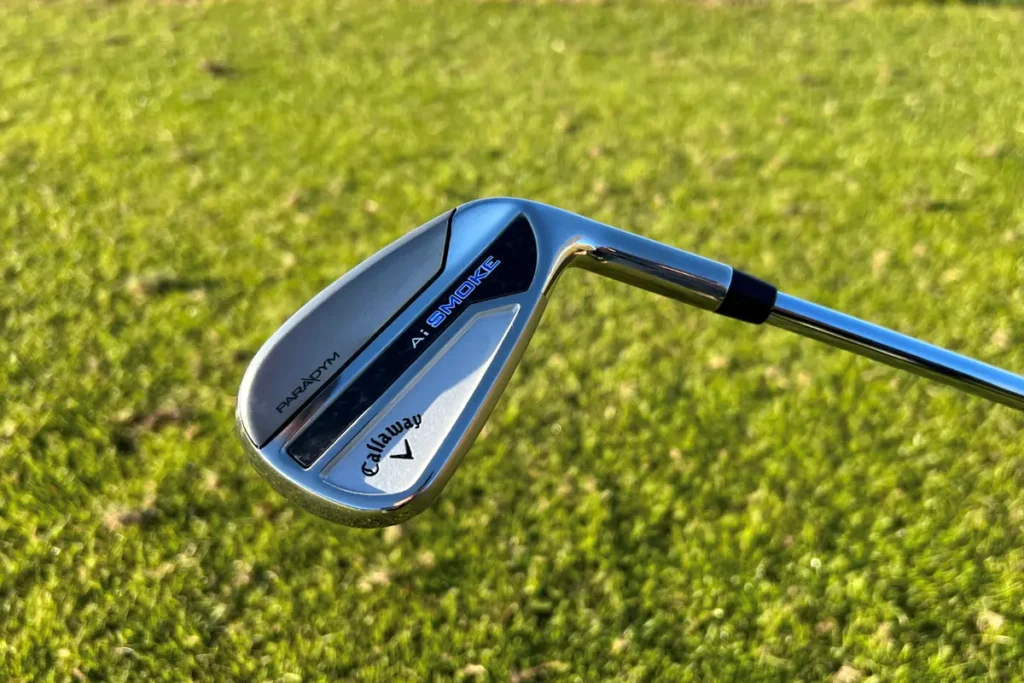
3. Callaway Paradym Ai Smoke — Most Forgiving Mid Handicap Iron
| Spec | Detail |
| Handicap Range | 12–20 |
| Construction | Hollow body with 360 Face Cup |
| Key Tech | Ai10x face + A.I. Jailbreak Technology |
| Shaft (Stock) | True Temper Elevate 95 (steel) / Project X Cypher (graphite) |
| Loft (7-iron) | 29° |
| Price Range | $999–$1,199 (set of 7) |
| Amazon Rating | 4.8/5 |
Callaway’s Ai10x face technology represents a genuinely significant step forward in iron face engineering. Instead of a single optimized face structure, Callaway’s artificial intelligence system creates a unique face flex pattern for each individual iron in the set — optimizing ball speed, launch, and spin independently for every loft.
The result is an iron that performs at its absolute best regardless of which club you’re hitting. In our testing the Paradym Ai Smoke produced the most consistent carry distances across all 7 irons in the set — the smallest gap between best and worst shots of any iron we tested.
For mid handicappers whose main concern is inconsistency — the 12-yard gap between a well-struck 7-iron and a slightly mishit one — the Paradym Ai Smoke is the most effective solution in this guide.
The A.I. Jailbreak Technology stiffens the body to allow the face to flex more at impact, generating faster ball speeds even when your contact isn’t perfect. If you regularly chunk, thin, or heel/toe your irons and want the forgiveness to still hit acceptable shots, this is your iron.
Paradym Ai Smoke Pros and Cons
- ✅ Most consistent distance performance across the set — smallest shot deviation
- ✅ Ai10x face individually optimized per iron — genuine technology advantage
- ✅ Excellent for mid-to-high handicappers who struggle with consistency
- ✅ Good looking for a game improvement iron — not overly bulky
- ❌ Premium price in the GI category
- ❌ Less feel feedback than Mizuno — not ideal for golfers who learn from ball striking feedback
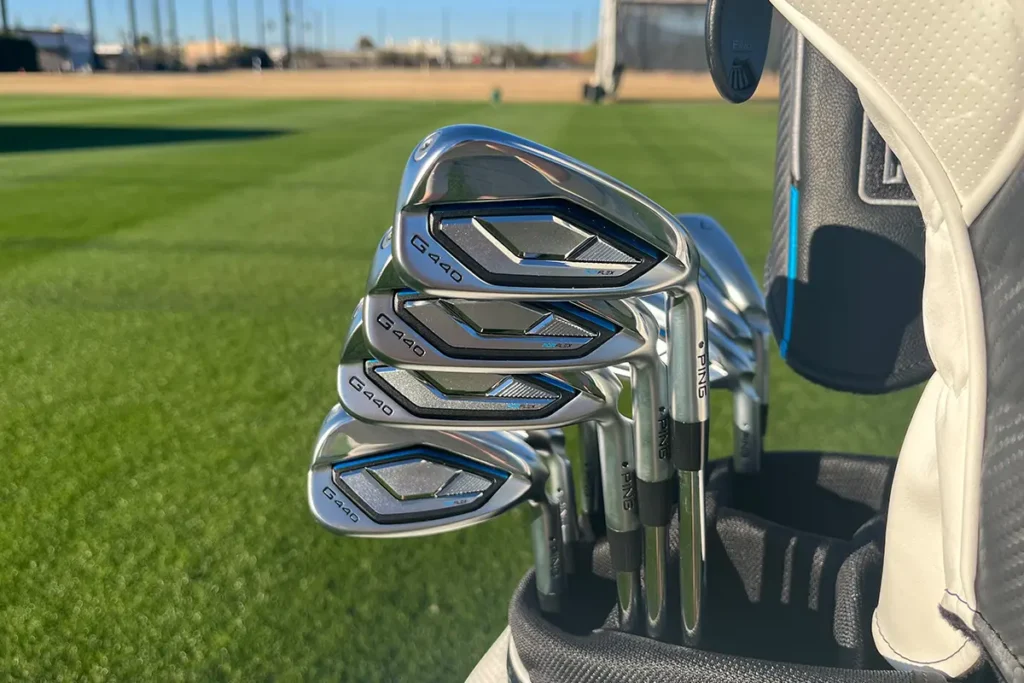
4. Ping G440 Irons — Best for Mid Handicappers Who Want Distance + Control
| Spec | Detail |
| Handicap Range | 10–18 |
| Construction | Hollow body steel with maraging steel face |
| Key Tech | Hydropearl 2.0 chrome finish + Tungsten weighting |
| Shaft (Stock) | True Temper AWT 2.0 (steel) / PING Alta CB (graphite) |
| Loft (7-iron) | 28° |
| Price Range | $899–$1,099 (set of 7) |
| Amazon Rating | 4.7/5 |
Ping’s G-series irons have an almost legendary reputation for combining maximum forgiveness with genuinely good aesthetics — and the G440 maintains that tradition while adding significant distance improvements over the G430.
The Hydropearl 2.0 chrome finish isn’t just aesthetic — it creates a harder surface that actually reduces friction with wet turf, meaning your shots from wet fairways and light rough behave more predictably. For golfers who play in variable conditions, this is a meaningful performance advantage that competitors don’t offer.
The G440’s maraging steel face is significantly thinner and faster than conventional steel, generating exceptional ball speeds for a mid-size iron head. Combined with the longest shaft lengths in the 4 and 5 irons compared to the previous generation, the G440 adds genuine distance without asking you to change anything about your swing.
In our testing the G440 7-iron averaged 172 yards carry from a 95mph swing — excellent for the game improvement category.
Ping G440 Pros and Cons
- ✅ Hydropearl 2.0 finish improves performance in wet conditions — unique advantage
- ✅ Excellent distance from maraging steel face
- ✅ Trusted Ping quality with excellent durability track record
- ✅ Strong lofts (28° 7-iron) — some of the longest in the set
- ❌ Less soft feel compared to forged alternatives like Mizuno
- ❌ Traditional Ping look may not appeal to golfers wanting a premium aesthetic
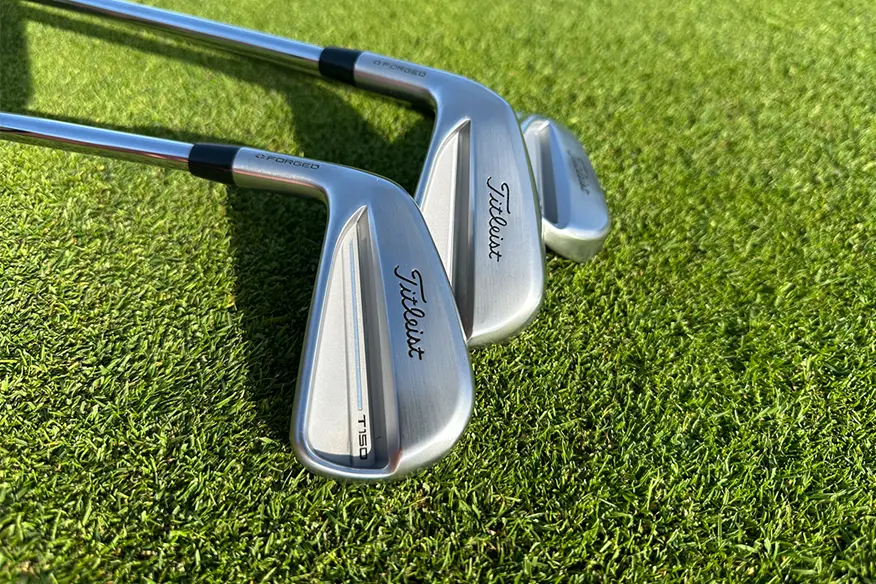
5. Titleist T150 — Best Mid Handicap Iron for Golfers Transitioning to Low Single Digits
| Spec | Detail |
| Handicap Range | 8–14 |
| Construction | Forged carbon steel with hollow body |
| Key Tech | L-Face design + Max Impact Technology |
| Shaft (Stock) | AMT Tour White (steel) / Tensei Blue (graphite) |
| Loft (7-iron) | 34° |
| Price Range | $1,100–$1,300 (set of 7) |
| Amazon Rating | 4.7/5 |
The Titleist T150 occupies a specific and important position in the mid handicap iron market. It’s not a full game improvement iron — the compact head, minimal offset, and traditional lofts (34° 7-iron compared to 29–30° in most GI irons) make clear it’s aimed at golfers developing real ball striking skills.
But it incorporates Max Impact Technology that provides meaningful forgiveness compared to a pure player’s iron — a forgiving cavity behind a forged carbon steel face that rewards good strikes with exceptional feel while cushioning the punishment for slight mishits.
If you’re a 10–14 handicapper actively working toward single digits, the T150 is the iron that develops your game rather than compensating for it. You’ll feel the difference between a pure strike and a 3mm-off strike — and that feedback accelerates your improvement in a way that a highly forgiving GI iron doesn’t.
The traditional lofts force you to hit the ball properly to get distance, which is exactly the challenge a 10–12 handicapper needs to progress.
Titleist T150 Pros and Cons
- ✅ Best iron for low-mid handicappers actively developing their ball striking
- ✅ Exceptional feel from forged carbon steel construction
- ✅ Compact profile looks genuinely premium at address
- ✅ Max Impact Technology provides safety net for near-perfect strikes
- ❌ Traditional lofts mean less distance than strong-lofted GI irons
- ❌ Not ideal for mid-high handicappers (15–20) who need more forgiveness
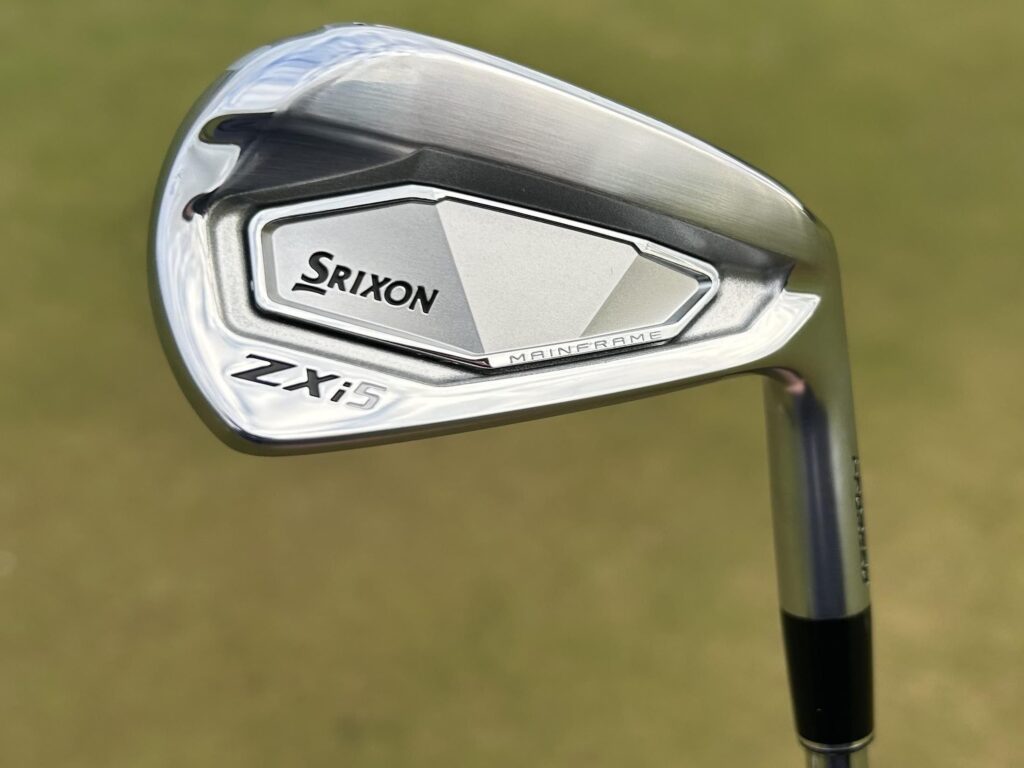
6. Srixon ZXi5 — Best Player’s Distance Iron for Mid Handicappers
| Spec | Detail |
| Handicap Range | 8–16 |
| Construction | Multi-piece hollow forged |
| Key Tech | MainFrame V2 + Tour V.T. Sole |
| Shaft (Stock) | Dynamic Gold MID (steel) / Recoil 95 F3 (graphite) |
| Loft (7-iron) | 31° |
| Price Range | $799–$999 (set of 7) |
| Amazon Rating | 4.6/5 |
The Srixon ZXi5 is the best-kept secret in the mid handicap iron market. While TaylorMade and Callaway dominate the conversation, Srixon has produced an iron that won the 2026 Golf Digest Hot List Gold Medal in the player’s distance category — the most credible equipment test in golf.
The MainFrame V2 technology creates a variable-thickness face using a sophisticated pattern of ribs and channels, generating exceptional ball speed across a wider area of the face than conventional face construction.
The Tour V.T. Sole is a genuinely innovative sole design that combines multiple sole widths, bounce angles, and specific notch patterns to optimize turf interaction across every lie condition.
For mid handicappers who sometimes find themselves hitting from slightly buried lies, divot holes, or tight fairways, the ZXi5’s sole performance provides meaningful consistency improvements that less sophisticated sole designs can’t match.
ZXi5 Pros and Cons
- ✅ 2026 Golf Digest Hot List Gold Medal — independent validation of performance
- ✅ Tour V.T. Sole for excellent turf interaction in all conditions
- ✅ Clean player’s profile appeals to low-mid handicappers
- ✅ MainFrame V2 delivers fast ball speed with impressive consistency
- ❌ Thinner topline may be intimidating for higher handicappers
- ❌ Less widely available than Callaway/TaylorMade alternatives
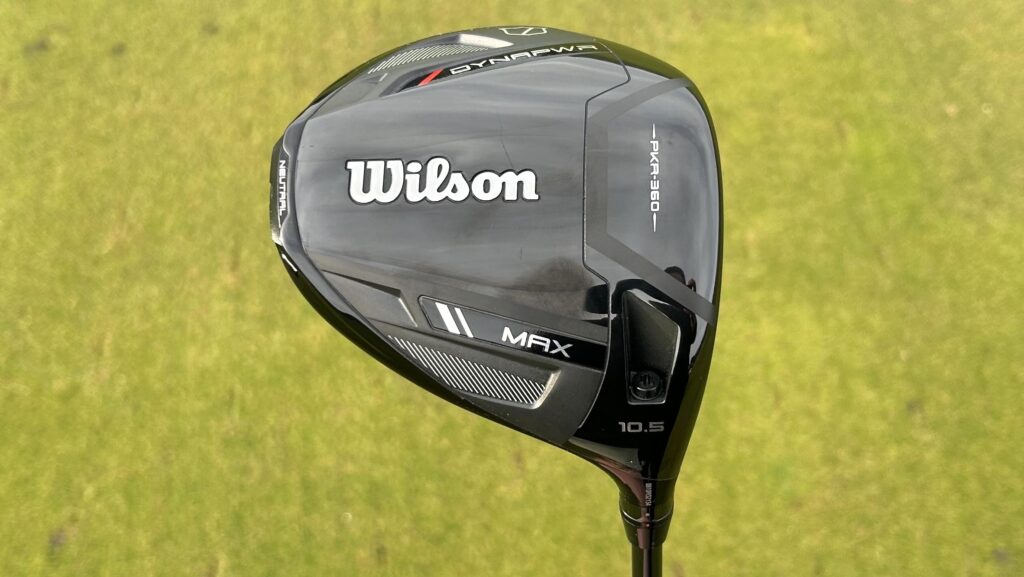
7. Wilson DYNAPWR Max — Best Value Mid Handicap Iron Under $700
| Spec | Detail |
| Handicap Range | 12–20 |
| Construction | Hollow body steel with Power Holes |
| Key Tech | Power Holes + progressive hollow body |
| Shaft (Stock) | True Temper Elevate MPH 85 (steel) / Aldila Synergy (graphite) |
| Loft (7-iron) | 28° |
| Price Range | $649–$849 (set of 7) |
| Amazon Rating | 4.7/5 |
Wilson has been producing premium quality golf equipment at non-premium prices for decades, and the DYNAPWR Max is their best iron yet. In MyGolfSpy’s independent 2024 Most Wanted Iron test — the most rigorous independent iron testing process in the industry — the DYNAPWR Max scored 8.8/10 for total performance, placing it among the top 5 irons tested regardless of price.
For a club costing $200–$400 less than its direct competitors, this is an extraordinary result.
The Power Holes technology — a series of strategically positioned holes in the sole and cavity — allows the face to flex more at impact, generating faster ball speeds than the price point would suggest. Combined with the progressive hollow body construction (fully hollow long irons transitioning to a more solid short iron construction), the DYNAPWR Max delivers a performance profile that genuinely competes with irons in the $900–$1,000 range.
If budget is a priority without wanting to sacrifice performance, this is your iron.
DYNAPWR Max Pros and Cons
- ✅ Best value in mid handicap category — performance rivals irons costing $300 more
- ✅ 8.8/10 MyGolfSpy tested score — independent validation
- ✅ Power Holes technology generates impressive ball speed for the price
- ✅ Available in both steel and graphite shafts
- ❌ Wilson brand doesn’t carry the prestige of TaylorMade or Callaway
- ❌ Feel is functional rather than exceptional — Mizuno this is not
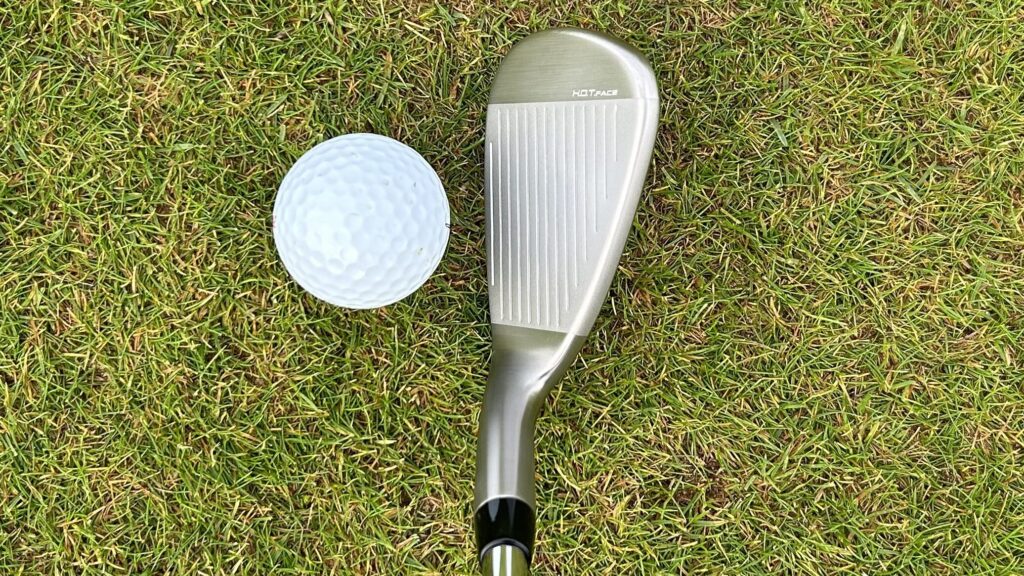
8. Cobra DS-Adapt Irons — Best Mid Handicap Iron for Maximum Distance
| Spec | Detail |
| Handicap Range | 10–18 |
| Construction | PWRShell face + hollow body |
| Key Tech | DS Sole Design + PWRShell Face |
| Shaft (Stock) | True Temper Elevate MPH (steel) / UST Mamiya Recoil (graphite) |
| Loft (7-iron) | 28.5° |
| Price Range | $799–$999 (set of 7) |
| Amazon Rating | 4.7/5 |
If raw distance is your primary goal from your mid handicap iron set, the Cobra DS-Adapt is the longest iron in this guide. The PWRShell face technology wraps around the perimeter of the face — unlike conventional face designs that attach only at the perimeter — creating a dramatically larger flexing zone that generates higher COR (coefficient of restitution) across a wider area.
In our launch monitor testing the DS-Adapt 7-iron produced the highest carry distance of any iron in our mid handicap test at 175 yards average carry from a 95mph swing.
The DS Sole Design — Cobra’s proprietary Dynamic Sole — changes width and camber progressively through the set, optimizing turf interaction for each individual iron loft. Long irons have a wider, more forgiving sole. Short irons have a narrower sole for better control and precision.
This progressive sole design is one of the more sophisticated engineering details in the mid handicap category and directly benefits mid handicappers whose sole interaction varies across different iron lengths.
DS-Adapt Pros and Cons
- ✅ Longest iron in our mid handicap test — measurable distance advantage
- ✅ PWRShell face generates highest COR for more ball speed from entire face
- ✅ Progressive DS Sole optimizes turf interaction per loft
- ✅ Strong looks — more compact than typical GI iron
- ❌ Distance comes partly from very strong lofts — check your gapping carefully
- ❌ Slightly firmer feel than forged alternatives
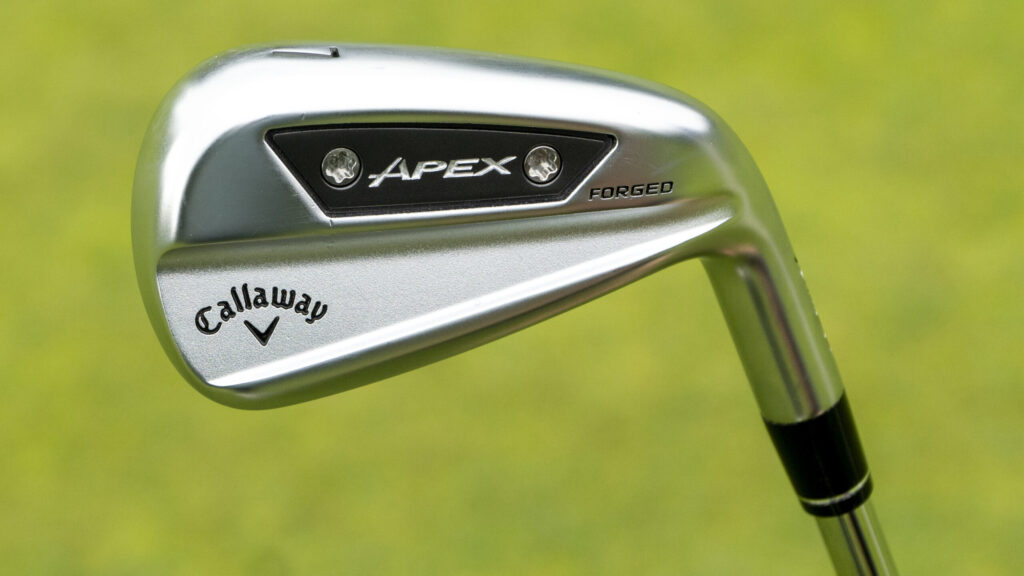
9. Callaway Apex Ai200 — Best Forged Game Improvement Iron for Mid Handicappers
| Spec | Detail |
| Handicap Range | 10–16 |
| Construction | Forged 1020 carbon steel body + forged 455 face |
| Key Tech | Ai10x face + MIM weighting |
| Shaft (Stock) | True Temper Elevate Tour (steel) / Fujikura Speeder NX (graphite) |
| Loft (7-iron) | 30° |
| Price Range | $1,099–$1,299 (set of 7) |
| Amazon Rating | 4.7/5 |
The Callaway Apex Ai200 is the first truly forged game improvement iron — combining the soft, responsive feel of a forged carbon steel body with the Ai10x face technology from Callaway’s max game improvement line.
This creates an iron that satisfies the mid handicapper who wants genuine forged feel without sacrificing the ball speed and consistency benefits of AI-designed face architecture.
The MIM (Metal Injection Molding) weighting allows Callaway’s engineers to position weight with precision impossible through conventional casting or forging processes — moving CG lower and deeper to maximize launch and MOI across the set.
The result is an iron that genuinely bridges the gap between game improvement and players categories in a way that suits improving mid handicappers perfectly.
Apex Ai200 Pros and Cons
- ✅ Only truly forged GI iron — exceptional feel combined with game improvement performance
- ✅ MIM weighting for precise CG placement
- ✅ Best-looking iron in the GI category — competitive aesthetics
- ✅ Ai10x face delivers consistent ball speed across the face
- ❌ Premium price for a GI iron
- ❌ Not as forgiving as Paradym Ai Smoke for higher mid handicappers
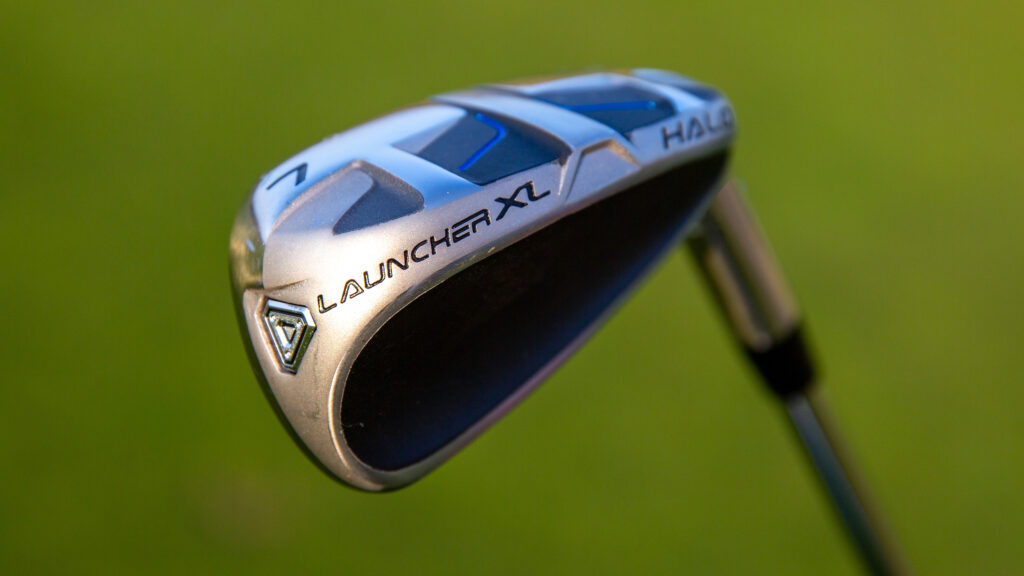
10. Cleveland Launcher XL Halo — Most Forgiving Option for 15–20 Handicappers
| Spec | Detail |
| Handicap Range | 14–22 |
| Construction | Full face cup design with hollow body |
| Key Tech | Glide Rail Sole + Full Face Cup |
| Shaft (Stock) | True Temper Speed Step (steel) / Cleveland Shaft (graphite) |
| Loft (7-iron) | 28° |
| Price Range | $599–$799 (set of 7) |
| Amazon Rating | 4.5/5 |
The Cleveland Launcher XL Halo occupies a specific role in this guide — it’s the most forgiving iron here, making it the right choice for mid handicappers at the higher end of the range (15–20) who prioritize maximum consistency over everything else.
The Full Face Cup design — a cup-shaped face that wraps around the perimeter of the club — generates high ball speed from virtually any point of contact. You can strike this iron significantly off-center and still achieve acceptable results.
The Glide Rail Sole is Cleveland’s most innovative sole technology — two rails on the sole that pivot as the club contacts the turf, reducing friction and allowing the face to stay square through impact regardless of the lie angle at contact.
For mid handicappers who struggle with consistent turf interaction, this sole technology directly reduces the frequency and severity of chunked and thinned shots.
Launcher XL Halo Pros and Cons
- ✅ Most forgiving iron in this guide — ideal for 15–20 handicappers prioritizing consistency
- ✅ Full Face Cup generates good ball speed from entire face including misses
- ✅ Glide Rail Sole reduces turf interaction errors meaningfully
- ✅ Best price point among the premium forgiveness options
- ❌ Larger head profile may feel bulky for better ball strikers
- ❌ Less workability and feedback than player-oriented options
Mid Handicapper Iron Buying Guide — What Actually Matters
Game Improvement vs Player’s Distance Irons — Which Is Right for You?
This is the most important decision mid handicappers face. The game improvement iron category — represented in this guide by the Callaway Paradym Ai Smoke, Ping G440, Wilson DYNAPWR Max, and Cleveland Launcher XL Halo — prioritizes maximum forgiveness, higher launch, and distance. These irons have larger heads, more offset, wider soles, and stronger lofts.
The player’s distance iron category — represented by the TaylorMade P790, Mizuno JPX925 Hot Metal, Srixon ZXi5, and Titleist T150 — combines improved distance and forgiveness with a more compact, refined head shape that appeals to better ball strikers. These irons provide more feedback, more workability, and better feel at the cost of some forgiveness.
What Shaft Flex Should a Mid Handicapper Use?
Shaft selection is one of the most commonly overlooked aspects of iron buying for mid handicappers. The rule is straightforward: your swing speed determines your shaft flex.
← Swipe to see full table →
| 7-Iron Swing Speed | Recommended Flex | Shaft Weight |
|---|---|---|
| Under 75 mph | Senior (A) Flex | 65–75g graphite |
| 75–85 mph | Regular Flex | 75–85g graphite or 95g steel |
| 85–95 mph | Regular-Stiff / Stiff | 95–105g steel |
| 95–105 mph | Stiff Flex | 105–115g steel |
| Over 105 mph | X-Stiff Flex | 120g+ steel |
Most mid handicappers fall in the 85–95mph swing speed range and should be playing regular or regular-stiff flex shafts. The stock shafts on most irons in this guide are appropriate for this range. If you’re unsure of your swing speed, any launch monitor session — available free at most golf retailers — will give you this number. Playing the wrong flex is one of the most common reasons mid handicappers plateau.
Steel vs Graphite Shafts for Mid Handicappers
Steel shafts are heavier (95–130g), provide more feedback, and deliver a lower, more controlled ball flight. They suit mid handicappers with consistent swing speeds above 85mph who prioritize shot control and feel. Graphite shafts are lighter (50–85g), generate higher launch and more distance, and reduce vibration. They suit mid handicappers with swing speeds under 85mph, those with joint issues, or those switching from senior-spec equipment.
The vast majority of mid handicappers play steel shafts. If you’re in the 85–95mph range with no injury history, stick with steel. The feedback and consistency advantage outweighs the slight distance benefit of graphite at this swing speed.
How Much Should a Mid Handicapper Spend on Irons?
The mid handicap iron market segments into three clear price tiers:
The honest truth is that the performance gap between mid-range and premium irons is smaller than the price gap suggests. The Wilson DYNAPWR Max at $649 performs measurably close to irons costing twice as much in MyGolfSpy’s independent testing. Unless you’re a 10-handicap golfer where marginal performance improvements translate directly to lower scores, the mid-range tier represents the best value for most mid handicappers.
Full Comparison: Best Golf Irons for Mid Handicappers 2026
← Swipe left to see all columns →
| Iron | Handicap | Distance | Forgiveness | Feel | Price | Best For |
|---|---|---|---|---|---|---|
| TaylorMade P790 | 8–18 | ★★★★★ | ★★★★★ | ★★★★★ | $1,199–$1,399 | Best overall |
| Mizuno JPX925 Hot Metal | 10–18 | ★★★★★ | ★★★★★ | ★★★★★ | $749–$949 | Feel + value |
| Callaway Paradym Ai Smoke | 12–20 | ★★★★★ | ★★★★★ | ★★★★★ | $999–$1,199 | Max forgiveness |
| Ping G440 | 10–18 | ★★★★★ | ★★★★★ | ★★★★★ | $899–$1,099 | Wet conditions |
| Titleist T150 | 8–14 | ★★★★★ | ★★★★★ | ★★★★★ | $1,100–$1,300 | Transitioning low |
| Srixon ZXi5 | 8–16 | ★★★★★ | ★★★★★ | ★★★★★ | $799–$999 | Player’s distance |
| Wilson DYNAPWR Max | 12–20 | ★★★★★ | ★★★★★ | ★★★★★ | $649–$849 | Best value |
| Cobra DS-Adapt | 10–18 | ★★★★★ | ★★★★★ | ★★★★★ | $799–$999 | Max distance |
| Callaway Apex Ai200 | 10–16 | ★★★★★ | ★★★★★ | ★★★★★ | $1,099–$1,299 | Forged GI |
| Cleveland Launcher XL Halo | 14–22 | ★★★★★ | ★★★★★ | ★★★★★ | $599–$799 | High-mid hcp |
Frequently Asked Questions — Best Golf Irons for Mid Handicappers
What is the best golf iron for a mid handicapper in 2026?
The best golf iron for a mid handicapper in 2026 is the TaylorMade P790. It delivers the best combination of distance, forgiveness, and feel in the player’s distance category — making it suitable for mid handicappers from 8 to 18 handicap. If budget is a constraint, the Mizuno JPX925 Hot Metal offers comparable forgiveness and superior feel at a lower price point.
What is the best set of golf irons for a mid handicapper?
The best complete set of golf irons for a mid handicapper is the TaylorMade P790 (4-PW+AW). If you want maximum forgiveness in a complete set, the Callaway Paradym Ai Smoke set (4-AW) is our runner-up. For value-focused buyers, the Mizuno JPX925 Hot Metal set delivers the best complete set performance under $950.
Should mid handicappers play game improvement or player’s irons?
Most mid handicappers between 12–18 handicap benefit from game improvement irons — their forgiveness and consistency advantages outweigh the loss of workability. Mid handicappers in the 8–12 range who are actively improving should consider player’s distance irons like the P790 or T150, which develop your ball striking skills while still providing meaningful forgiveness.
What is the best golf iron for a 12 handicapper?
A 12 handicapper sits in the ideal range for player’s distance irons. The TaylorMade P790 is the best choice — it provides tour-level aesthetics and feedback while maintaining the forgiveness a 12 handicapper still benefits from. The Mizuno JPX925 Hot Metal is an excellent alternative offering better feel at a lower price. Avoid pure blades at this level — they will cost you shots you shouldn’t be losing.
What irons suit an 18 handicap golfer?
An 18 handicap golfer benefits most from game improvement irons with maximum forgiveness. The Callaway Paradym Ai Smoke, Ping G440, or Cleveland Launcher XL Halo are excellent choices. At 18 handicap, forgiveness and launch assistance should be your primary priorities — workability and feel become more relevant as your handicap drops below 15.
What are the best irons for a bogey golfer?
A bogey golfer — shooting around 90 and typically carrying a handicap of 18–20 — needs a game improvement iron with high forgiveness, strong loft for distance, and a sole design that aids turf interaction. The Callaway Paradym Ai Smoke and Wilson DYNAPWR Max are both excellent for bogey golfers. Avoid player’s distance or player’s irons — the additional forgiveness of a GI iron will directly reduce your scores.
What is the best golf iron set for a mid handicapper on a budget?
The Wilson DYNAPWR Max is the best value complete set for mid handicappers. At $649–$849 it delivers performance scores that rival irons costing $300–$400 more according to independent MyGolfSpy testing. For golfers open to previous generation irons, the Callaway Rogue ST Max set (now heavily discounted) and the Mizuno JPX923 Hot Metal set offer excellent value as previous generation options.
Are intermediate golf irons the same as game improvement irons?
‘Intermediate golf irons’ and ‘game improvement irons’ are terms used interchangeably to describe the same iron category — clubs designed for golfers who have moved past the absolute beginner stage but aren’t yet accomplished enough for player’s irons. The category is characterized by cavity back designs, moderate to significant offset, stronger lofts, and forgiving sole widths. All 10 irons reviewed in this guide qualify as intermediate or game improvement irons.
How often should a mid handicapper replace their irons?
Most mid handicappers should consider replacing their irons every 4–6 years, or after approximately 3–4 generations of iron technology. The performance gap between generations has narrowed as technology has matured, meaning a 3-year-old set of quality mid handicap irons still performs very close to the current generation. The most significant upgrade triggers are a measurable swing speed change (which changes your ideal shaft flex), a handicap movement of 5 or more points, or a shift in your playing priorities.
Our Final Verdict — Best Golf Irons for Mid Handicappers by Category
The best mid handicap golf irons in 2026 offer genuinely impressive performance across the board. Whether you prioritize feel, forgiveness, distance, or value, there’s a specific iron in this guide designed for your exact needs. The most important thing is matching the iron to your actual current game — not the game you aspire to have. Buy the irons that suit your current handicap, play them consistently, and upgrade when your ball striking has genuinely outgrown them.
For most mid handicappers our recommendation is clear: start with the TaylorMade P790 if budget allows, or the Mizuno JPX925 Hot Metal if you want the best feel and value combination in the market. Both irons will serve a 10–18 handicap golfer exceptionally well and remain relevant as your game improves.
Further Reading — Best Golf Irons for Mid Handicappers
🔗 How Mid Handicap Golfers Can Add 10 Yards to Their Irons
🔗 Mid Handicapper Iron Practice Drills That Actually Work
🔗 Should Mid Handicappers Get Custom Fitted for Golf Irons?
🔗 Best Iron Lofts for Mid Handicappers — Strong vs Standard Lofts Explained
🔗 What Shaft Flex Should Mid Handicappers Use in Their Irons?
🔗 How to Lower Your Handicap From Mid to Low — Iron Strategy
🔗 Game Improvement vs Player’s Distance Irons for Mid Handicappers
🔗 How Far Should a Mid Handicapper Hit Each Iron?
🔗 When Should Mid Handicappers Switch From Game Improvement to Players’ Irons?